Robotic process automation and artificial intelligence are transforming how organizations operate, innovate, and grow. When you combine RPA with AI, you get more than incremental efficiency gains; you unlock a new operating model where routine work is automated, decisions are smarter, and teams are free to focus on high‑value activities. Organizations are also using AI to improve customer satisfaction, delivering faster, more personalized service while freeing human agents to handle complex interactions.
This article explains what robotic process automation (RPA) and artificial intelligence (AI) are, how they complement each other, and how you can use them together to drive powerful, measurable business outcomes.
In today’s fast-paced business environment, organizations are constantly searching for ways to enhance efficiency and streamline operations. One innovative approach is leveraging high-performance computing solutions that can handle complex workflows and large volumes of data. By integrating advanced computing with RPA, companies can automate repetitive processes while ensuring accuracy and speed.
Marketing and customer engagement also benefit from these technological advances. Platforms like Marketing for Customers insights provide strategies to understand customer behavior, which can be paired with AI-driven automation to deliver timely, personalized interactions. With the ability to analyze trends and predict preferences, businesses can craft more meaningful connections with their audience.
Financial and operational planning is another area where intelligent automation makes a difference. Leveraging top financial resources for modern enterprises allows companies to forecast outcomes, reduce errors, and optimize decision-making processes. By combining these insights with robotic process automation and artificial intelligence, teams can shift from manual data handling to more strategic initiatives.
For organizations aiming to stay ahead in the tech landscape, exploring advanced supercomputing technologies offers a competitive advantage. These platforms enable faster simulations, more reliable analytics, and greater scalability for business operations. Integrating these tools with AI-powered RPA ensures that both routine and complex tasks are handled efficiently.
Finally, keeping up with emerging marketing tactics is crucial for sustained growth. Resources like Marketing Runners strategies for modern campaigns highlight innovative methods to reach audiences effectively. When combined with intelligent automation, companies can streamline campaign execution, track engagement in real-time, and adjust strategies dynamically for maximum impact.
By connecting these technologies, from high-performance computing to AI-driven marketing insights, businesses can fully leverage the potential of robotic process automation and artificial intelligence to innovate, scale, and improve overall efficiency.
Top 10 Robotic Process Automation and Artificial Intelligence Platforms for Modern Businesses
Robotic process automation and artificial intelligence are reshaping the way businesses operate, innovate, and deliver customer experiences. Choosing the right platform can help you automate repetitive tasks, gain insights from data, and improve operational efficiency. Here are the top 10 platforms to consider:
1. Bright Pattern
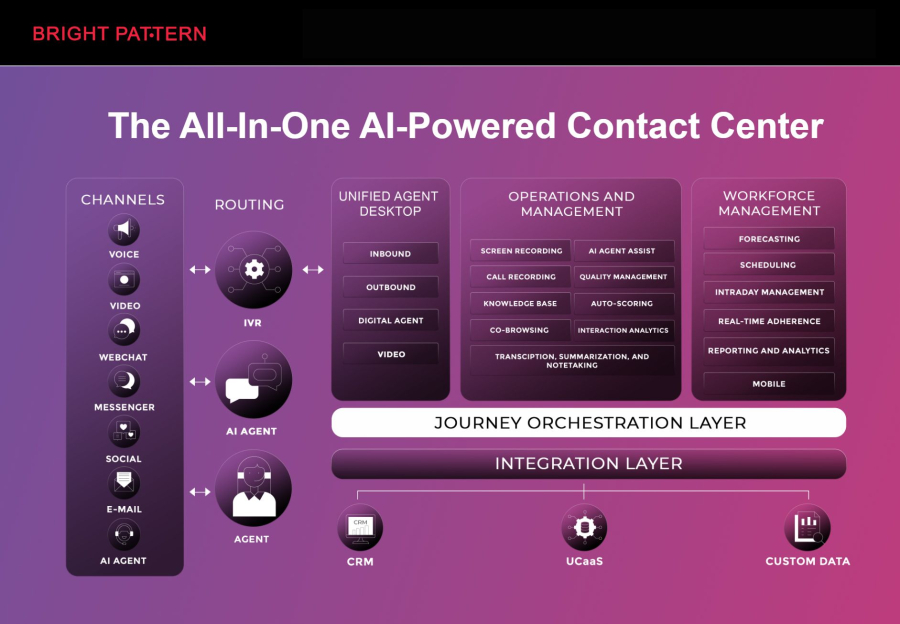
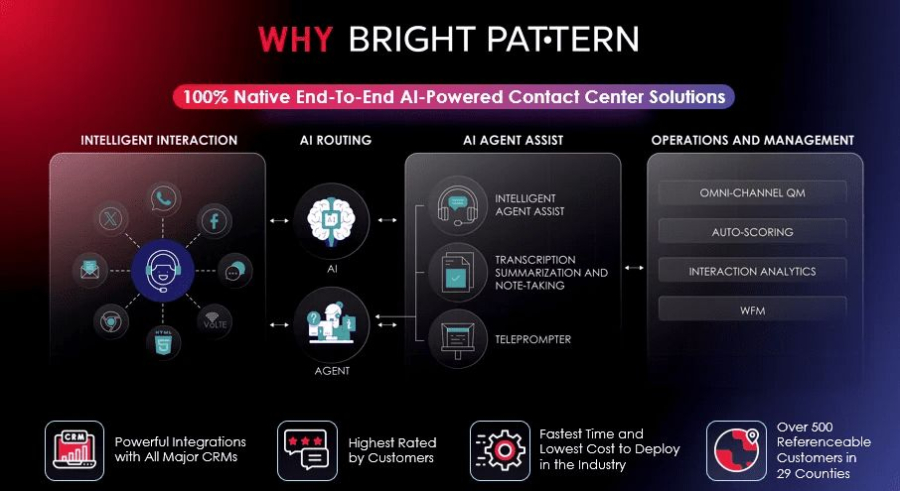
Bright Pattern leads the way in combining robotic process automation and artificial intelligence to deliver seamless customer experiences. Its cloud-based platform enables organizations to automate complex workflows while integrating AI-powered decision-making. Key benefits include:
- Omnichannel contact center automation for voice, chat, email, and social interactions
- AI-driven analytics for better decision-making and customer insights
- Prebuilt integrations with CRM, ERP, and marketing systems
- Scalable architecture suitable for small businesses and large enterprises
With Bright Pattern, businesses can reduce manual effort, improve response times, and enhance overall customer satisfaction by leveraging advanced AI alongside automation workflows. Its platform also supports intelligent routing, predictive engagement, and automated follow-ups, helping teams focus on higher-value tasks while maintaining operational efficiency.
2. UiPath
UiPath is a leading RPA platform that provides tools for automating repetitive tasks across multiple business processes. Its AI capabilities enable intelligent document processing and predictive analytics to enhance workflow efficiency.
3. Automation Anywhere
Automation Anywhere combines RPA with AI-powered bots that can handle complex business operations, including invoice processing, customer support, and HR management.
4. Blue Prism
Blue Prism focuses on enterprise-scale RPA solutions, integrating AI to enhance decision-making and improve operational speed. Its digital workforce can execute repetitive tasks with high accuracy.
5. Pega
Pega offers a unified platform for robotic process automation and artificial intelligence, enabling automated case management, AI-driven recommendations, and customer journey optimization.
6. WorkFusion
WorkFusion uses AI-driven automation to streamline business processes such as finance, operations, and compliance. Its platform combines cognitive automation with traditional RPA to reduce manual workload.
7. Kofax
Kofax delivers intelligent automation solutions with AI-enhanced document and workflow processing. Its platform helps businesses capture, process, and analyze information efficiently.
8. NICE
NICE provides RPA solutions integrated with AI analytics for contact centers, back-office automation, and customer experience optimization. Its tools help businesses improve productivity and accuracy.
9. Appian
Appian combines low-code development with robotic process automation and artificial intelligence to enable businesses to quickly build automated workflows and smarter applications.
10. AntWorks
AntWorks focuses on cognitive machine reading and RPA, using AI to automate data extraction, validation, and integration across enterprise systems.
What Is Robotic Process Automation (RPA)?
Robotic process automationis software that mimics the actions a human performs on a computer to execute repetitive tasks across applications. Instead of a person clicking, typing, copying, and pasting, a software bot follows defined rules to complete those steps quickly and consistently.
Key Characteristics of RPA
- Rule based:Bots follow explicit instructions built from business rules and workflows.
- Repetitive task focus:Best suited for high volume, routine work such as data entry, report generation, or invoice processing.
- Application agnostic:Can interact with many systems through their user interface, APIs, or both.
- Fast deployment:RPA often requires less invasive changes than re‑architecting core systems.
Typical RPA Use Cases
- Copying data from emails or forms into core systems.
- Reconciling records between two or more applications.
- Generating and distributing standardized reports.
- Processing routine customer requests that follow clear rules.
On its own, RPA excels at speed and consistency. The magic happens when you combine it with AI to make those automated processes smarter and more adaptable.
What Is Artificial Intelligence (AI)?
Artificial intelligencerefers to systems and algorithms that perform tasks typically requiring human intelligence, such as understanding language, recognizing patterns, making predictions, or recommending actions.
Core AI Capabilities That Enhance Automation
- Machine learning (ML):Learns from data and improves predictions or classifications over time.
- Natural language processing (NLP):Understands and generates human language, powering chatbots, email routing, and document analysis.
- Computer vision:Interprets images and scanned documents, enabling automated data extraction.
- Optimization and decisioning:Evaluates multiple options and recommends or makes the best decision based on business rules and patterns.
AI addsintelligenceto the automation landscape, allowing systems to handle variation, ambiguity, and continuous learning instead of relying only on rigid rules.
RPA vs AI: Different Strengths, Stronger Together
RPA and AI are often discussed together, but they serve different roles. Understanding their respective strengths clarifies why combining them is so powerful.
|
Aspect |
RPA |
AI |
|
Primary focus |
Automating repetitive, rule based tasks |
Understanding, predicting, and making intelligent decisions |
|
Input type |
Structured data and well defined steps |
Structured and unstructured data, including text and images |
|
Adaptability |
Follows fixed rules |
Learns from data and can adapt over time |
|
Best at |
Speed, accuracy, and compliance in routine workflows |
Pattern recognition, forecasting, classification, and insights |
|
Business value |
Operational efficiency and cost reduction |
Better decisions, personalization, and innovation |
When you integrate RPA and AI, you move from simple task automation tointelligent automationthat can handle end to end processes, including exceptions, variations, and continual improvement.
How Robotic Process Automation and Artificial Intelligence Work Together
RPA and AI complement each other in a natural way. RPA provides the digital workforce that executes steps quickly and reliably. AI provides the intelligence to interpret information, decide what should happen next, and continuously optimize outcomes.
Common Patterns for Combining RPA and AI
- AI in front of RPA:AI reads and interprets emails, documents, or images, then RPA bots use the extracted data to trigger or complete processes.
- AI inside RPA workflows:During a process, a bot sends data to an AI model (for example, to predict risk or classify a case) and uses the result to decide the next action.
- AI behind RPA:RPA collects data from multiple systems and feeds it into AI models that analyze trends, forecast demand, or identify optimization opportunities.
Example: Intelligent Invoice Processing
Consider invoice processing, a classic back office process:
- An AI powered optical character recognition engine reads invoices in different formats.
- NLP and machine learning models extract supplier names, amounts, dates, and line items, even when layouts vary.
- An RPA bot checks extracted data against purchase orders and vendor records.
- If everything matches, the bot posts the invoice automatically. If not, it routes the case to a human for review.
The result is a process that is fast, accurate, and scalable, even when suppliers use inconsistent templates.
Business Benefits of Combining RPA and AI
Integrating robotic process automation and artificial intelligence creates a step change in performance. Organizations that adopt intelligent automation typically see benefits in four primary dimensions: efficiency, quality, experience, and innovation.
1. Dramatic Efficiency and Cost Savings
- Higher automation coverage:AI enables automation of processes that were previously too unstructured or variable for RPA alone.
- 24 / 7 digital workforce:Bots run continuously, handling large workloads without overtime costs or delays.
- Reduced manual rework:Intelligent data extraction and decisioning reduce errors and back and forth corrections.
2. Improved Accuracy and Compliance
- Consistent application of rules:RPA bots execute processes exactly as designed every time.
- AI based anomaly detection:Models can flag unusual patterns that may indicate fraud, risk, or compliance issues.
- Automatic audit trails:Every bot action can be logged, supporting audits and regulatory reporting.
3. Enhanced Customer and Employee Experience
- Faster response times:Tasks that once took hours or days can be resolved in minutes.
- Personalization at scale:AI can recommend next best actions or offers, while RPA executes them across systems.
- Reduced busywork:Employees spend less time on repetitive tasks and more time on creative, strategic, or relationship focused work.
4. Data Driven Innovation and Agility
- Richer data for analytics:Automated processes capture structured data that feeds dashboards and AI models.
- Faster experimentation:Changes to workflows or models can be deployed quickly, allowing rapid testing of new ideas.
- Scalable growth:When demand spikes, you can scale bots far more easily than hiring and training additional staff.
High Impact Use Cases Across Industries
Intelligent automation built on RPA and AI is relevant in nearly every industry. Below are practical, high value examples that organizations implement to capture quick wins and long term advantage.
Financial Services
- Loan and credit processing:AI scores applications, while RPA retrieves data from multiple systems and updates decisions automatically.
- Know your customer checks:Bots collect documentation and AI validates identity documents, accelerating onboarding.
- Transaction monitoring:AI models detect suspicious patterns and RPA creates investigation cases or alerts.
Healthcare and Life Sciences
- Claims processing:RPA validates coverage and benefits while AI classifies claims and predicts potential denials.
- Patient scheduling:AI predicts demand and no show risk; bots adjust schedules and send reminders automatically.
- Regulatory submissions:RPA gathers data from multiple systems and AI checks completeness and consistency.
Manufacturing and Supply Chain
- Demand forecasting and planning:AI forecasts demand; RPA updates planning systems and adjusts orders.
- Order to cash:Bots create orders, track shipments, and generate invoices, while AI prioritizes collections activities.
- Quality monitoring:AI analyzes sensor data or images to predict defects; RPA initiates quality checks or maintenance tickets.
Retail and E Commerce
- Customer service automation:AI chatbots answer questions, and RPA performs actions like refunds, order changes, or status updates.
- Pricing and promotion optimization:AI recommends pricing strategies, and bots roll out updates across systems.
- Product content management:RPA gathers product data; AI enriches descriptions and categorizes items accurately.
Building an Intelligent Automation Strategy
To capture the full value of robotic process automation and artificial intelligence, treat them as part of a cohesive strategy rather than isolated tools. A structured approach helps you scale quickly and sustainably.
1. Clarify Business Objectives First
Begin with clear, measurable goals such as:
- Reducing cycle times by a specific percentage.
- Improving accuracy or compliance metrics.
- Enhancing customer satisfaction scores.
- Freeing up a certain number of hours for higher value work.
These objectives guide which processes to target and how to prioritize investments.
2. Identify and Prioritize Use Cases
Assess your processes with criteria such as:
- Volume:How often the process runs. Higher volume usually means higher impact.
- Stability:How frequently the steps or rules change.
- Complexity:How much variation or judgment is required. This helps determine whether RPA, AI, or both are needed.
- Business value:Cost savings, risk reduction, or revenue impact.
3. Design End to End Workflows
Look beyond individual tasks and map the entire journey from trigger to outcome. Consider:
- Where unstructured data enters the process and how AI can interpret it.
- Which decision points can be enhanced with predictive or classification models.
- Where human expertise is essential and how automation can support, not replace, that work.
4. Align People, Process, and Technology
Successful intelligent automation is as much about people and processes as it is about tools. Make sure to:
- Engage process owners and frontline teams early.
- Define clear roles for business, IT, and data science teams.
- Provide training so employees understand how bots and AI support their work.
- Establish governance for model monitoring, bot maintenance, and change management.
Measuring Success: Key Metrics for Intelligent Automation
Tracking the right metrics helps you demonstrate value, refine your approach, and build momentum. Useful measures include:
Operational Metrics
- Cycle time reduction:How much faster a process runs after automation.
- Throughput:Number of transactions completed per day or per hour.
- Bot utilization:Percentage of time bots are productively running work.
Quality and Compliance Metrics
- Error rates:Number of defects or exceptions before and after automation.
- Rework volume:How often cases need to be corrected or repeated.
- Compliance adherence:Alignment with policies, regulations, and service level agreements.
Experience and Strategic Metrics
- Customer satisfaction:Changes in ratings, feedback, or retention after automation improvements.
- Employee engagement:Feedback on reduced manual work and increased time for value added activities.
- Innovation capacity:Number of new initiatives launched using freed up resources.
Practical Tips for Getting Started
You do not need to transform everything at once. A focused, iterative approach builds confidence and capability.
Start Small, Then Scale
- Select a manageable process with clear boundaries and measurable outcomes.
- Implement RPA first for structured, rule based portions of the process.
- Add AI components where they unlock clear additional value, such as automating exceptions or interpreting documents.
- Document lessons learned and reuse components in future projects.
Invest in Reusable Assets
To scale efficiently, design automations and AI models with reuse in mind. For example:
- Standard connectors and workflows for common systems.
- Reusable document understanding models for invoices, purchase orders, or contracts.
- Shared components for logging, monitoring, and exception handling.
Build Trust with Transparency
Employees and stakeholders are more likely to embrace intelligent automation when they understand how it works and how it benefits them. Support adoption by:
- Explaining how bots and AI augment, not replace, human expertise.
- Showing clear before and after metrics that demonstrate value.
- Inviting feedback and continuously refining processes based on user input.
The Future of RPA and AI: From Automation to Autonomy
The convergence of robotic process automation and artificial intelligence is moving organizations toward increasingly autonomous operations. Over time, intelligent systems will not only execute predefined processes but also recommend new ways of working based on data and outcomes.
As AI models become more capable and RPA platforms more integrated, expect to see:
- More end to end automation:Complex journeys, from customer onboarding to claims resolution, handled with minimal manual intervention.
- Self optimizing workflows:Processes that adjust steps, routing, and priorities automatically in response to real time data.
- Closer human machine collaboration:Digital assistants that proactively support employees with insights and actions, while bots execute behind the scenes.
Organizations that embrace this evolution early will be well positioned to deliver superior service, operate with agility, and create new value for customers and stakeholders.
Conclusion: Turning RPA and AI into a Growth Engine
Robotic process automation and artificial intelligence are far more than efficiency tools. Together, they form a powerful engine for growth, enabling you to redesign how work gets done, elevate customer experiences, and unlock new opportunities.
By starting with clear objectives, choosing high impact use cases, and combining the speed of RPA with the intelligence of AI, you can build an automation program that delivers results today and adapts to tomorrow. The organizations that treat RPA and AI as strategic capabilities, not isolated experiments, will set the pace for their industries in the years ahead.
